Home Buying Budget: How to Plan Your Property Purchase
Buying a home is an important financial decision, and proper budget planning can make the process more organized. Buyers need to consider not only the property price but also other expenses associated with purchasing and maintaining a home. A clear budget can help buyers understand their options before making a final decision.
Determine Your Total Budget
The first step is to understand how much you can comfortably spend on a property. Consider your income, savings, existing financial commitments, and future expenses before deciding on a purchase budget.
Consider Your Down Payment
If you are planning to use a home loan, the down payment is an important part of the purchase. Buyers should determine how much money they can arrange without affecting their essential financial requirements.
Plan for Home Loan Expenses
Home loans can include interest and other applicable charges. Buyers should understand the loan amount, repayment period, monthly EMI, and associated costs before selecting a financing option.
Include Registration and Transaction Costs
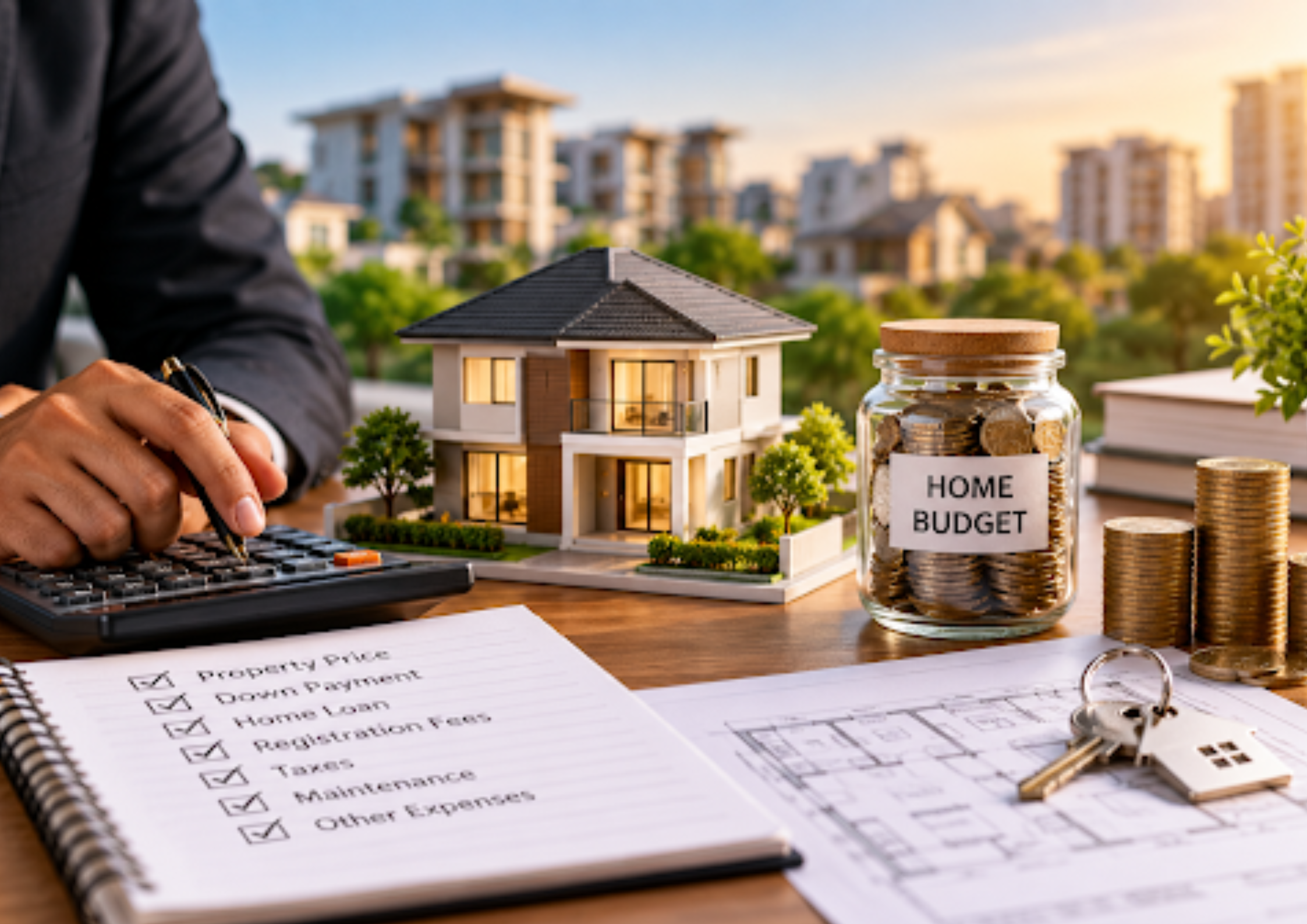
The property purchase price is not always the only expense. Buyers should also keep a budget for applicable registration, documentation, taxes, and other transaction-related costs.
Consider Property Maintenance
After purchasing a property, regular maintenance may be required. Expenses can include repairs, electrical work, plumbing, security, cleaning, and other upkeep requirements.
Compare Different Property Options
Buyers should compare properties based on price, location, size, facilities, condition, and future requirements. Comparing multiple options can help identify properties that fit within the planned budget.
Keep an Emergency Fund
It is important not to use all available savings for the property purchase. Keeping an emergency fund can provide financial support for unexpected expenses after buying the property.
Consider Your Future Financial Needs
A home purchase should be planned according to both present and future financial responsibilities. Buyers should consider education, family expenses, lifestyle requirements, and other long-term commitments.
Choose Property According to Your Requirements
A higher-priced property is not necessarily suitable for every buyer. The right property should provide the required space, location, facilities, and features while remaining within a manageable budget.
Review the Complete Cost Before Purchase
Before finalizing a property, buyers should calculate the complete expected cost instead of considering only the listed property price. This provides a clearer picture of the financial commitment involved.
Conclusion
A well-planned property budget helps buyers understand their financial limits and compare suitable options. Considering the property price, loan requirements, transaction expenses, maintenance, and future financial needs can make the home-buying process more structured and manageable.